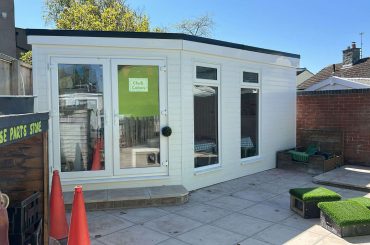
One of the most common questions homeowners ask when planning a garden room is: “What’s the best base?”
The honest answer is that there isn’t one.
The right foundation depends on factors such as access, ground conditions, drainage, levels and the design of the building itself. A solution that works perfectly in one garden may not be the best choice in another.
That is why we do not favour a single foundation system. At Garden Room Co, we regularly install concrete pads, ground screws, steel frame foundations and plastic lumber systems, selecting the option that best suits the site and the building.
Understanding the differences between them can help you make a more informed decision.
Why the Foundation Matters
A garden room is only as good as the foundation beneath it. The foundation is responsible for supporting the structure, preventing movement, managing moisture and ensuring the building remains comfortable and durable for years to come.
A well-designed foundation should provide:
- Long-term structural stability
- Effective moisture protection
- Appropriate ventilation where required
- Suitability for the site’s ground conditions
- Minimal disruption to your garden
Let us take a closer look at the most common options.

Concrete Pad Foundations
Concrete pads have been used in construction for decades and remain one of the most widely recognised foundation systems.
A reinforced concrete slab creates a solid, continuous surface on which the garden room is built. This provides excellent load distribution and a stable platform for the building above.
Advantages
- Proven and familiar construction method
- Excellent structural stability
- Suitable for most garden room designs
- Creates a solid feel underfoot
- Can support a wide range of building sizes and layouts
- Considerations
- Requires excavation and ground preparation
- Can be more disruptive to existing landscaping
- Longer installation and curing times
When using a concrete pad, moisture protection is typically achieved through traditional damp-proofing methods. A damp proof membrane beneath the slab and damp proof courses within the building structure help prevent ground moisture from entering the floor and walls.
Because the building sits directly on the slab, ventilation beneath the structure is generally not required in the same way as raised foundation systems.
Ground Screw Foundations
Ground screws have become increasingly popular in recent years, particularly where speed of installation and reduced ground disturbance are priorities.
Large galvanised steel screws are mechanically driven into the ground, creating stable load-bearing points for the structure above.
Advantages:
- Fast installation
- Minimal excavation required
- Reduced impact on existing landscaping
- Suitable for sites with restricted access
- Can often be installed in a single day
- Considerations
- Ground conditions should be assessed before installation
- Creates a raised structure above ground level
- Requires careful floor design and insulation
One question we hear frequently is whether airflow beneath a garden room is important when using ground screws?
The answer is yes.
Unlike a concrete slab, a ground screw system creates a suspended floor with a void beneath the building. Allowing air to circulate through this space helps manage moisture levels and reduces the risk of damp conditions developing beneath the floor structure.
This is why well-designed ground screw installations incorporate adequate clearance from the ground and allow natural airflow beneath the building.
It is important to understand that this does not mean concrete foundations are at a disadvantage. They simply manage moisture in a different way. Ground screw systems rely on ventilation beneath the floor, while concrete pads typically rely on damp proof membranes and damp proof courses integrated into the construction.
Both approaches can be highly effective when designed and installed correctly.
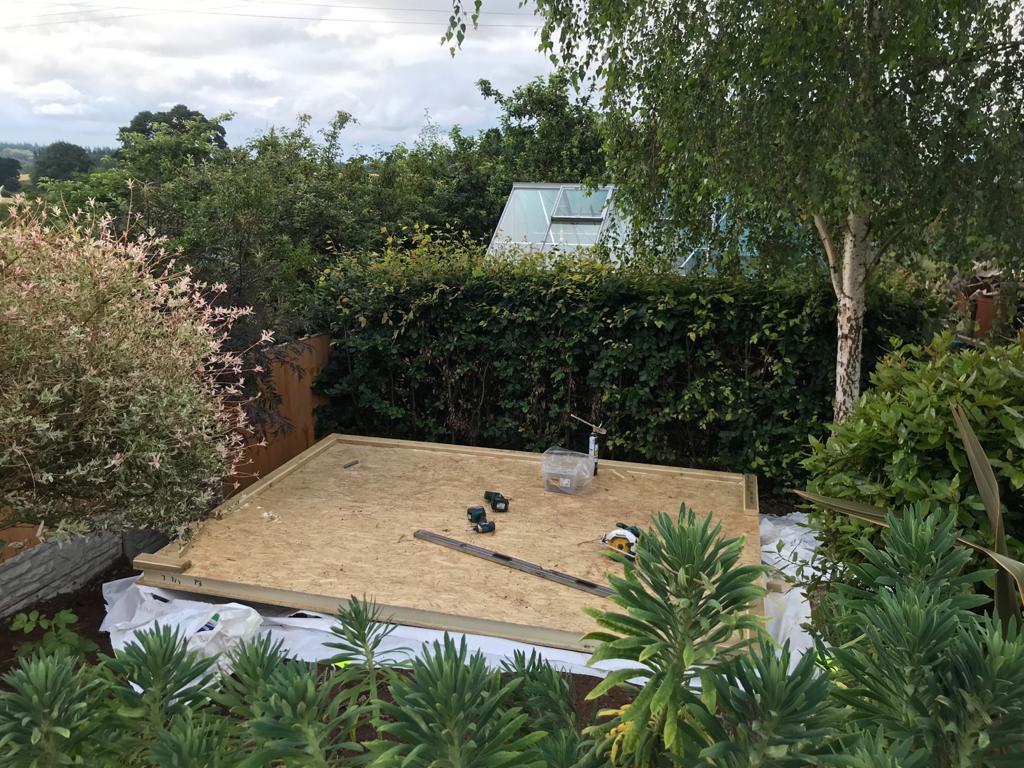
Steel Frame Foundations on Concrete Footings
This approach combines elements of traditional and modern foundation design.
Concrete footings are installed at strategic load-bearing points, with a galvanised steel frame spanning between them to support the building.
Advantages:
- Strong and durable support system
- Reduced concrete usage compared with a full slab
- Suitable for uneven ground
- Creates a level platform with minimal excavation
- Considerations
- Requires accurate installation
- Raised floor design requires appropriate insulation and detailing
- Access beneath the structure should be considered
Like ground screw systems, steel frame foundations generally create a ventilated void beneath the building. Proper airflow helps control moisture and supports the long-term performance of the floor structure.
Plastic Lumber Foundation Systems (Plasteco)
Plastic lumber foundation systems such as Plasteco offer an alternative to more traditional foundation methods.
Manufactured from recycled plastic materials, these systems create a durable and stable subframe that supports the garden room while reducing the amount of excavation and concrete required on site.
Advantages:
- Manufactured from recycled materials
- Resistant to rot and moisture
- Reduced excavation requirements
- Fast installation
- Can help minimise ground disturbance
- Considerations
- Site suitability should be assessed on a project-by-project basis
- Correct installation and support spacing are essential
- Less familiar to some homeowners than traditional foundation methods
Like other raised foundation systems, moisture management is typically achieved through a combination of floor insulation, vapour control layers and adequate airflow beneath the structure.
When specified appropriately, plastic lumber foundation systems can provide a durable, low-maintenance alternative to more traditional garden room foundations.
Which Base Is Right for Your Garden Room?
Every garden is different.
A flat site with excellent access may be perfectly suited to a concrete pad. A sloping garden with restricted access may benefit from ground screws or a steel frame system. In other situations, a plastic lumber foundation may offer the ideal balance between performance, speed of installation and reduced ground disturbance.
The important thing is not choosing a particular foundation type before the project begins. It is choosing the foundation that suits the conditions on site.
When properly designed and installed, all of the systems discussed above can provide a stable, durable foundation for a garden room. The difference lies in understanding which solution is best suited to the location, access and intended use of the building.
That is why every project should start with the site itself.
At Garden Room Co, we believe the foundation should be selected to suit the garden, not the other way around. By assessing access, ground conditions, drainage and building design before work begins, it is possible to choose a solution that delivers long-term performance, stability and value for years to come.